
How to keep a fun fencing journal, celebrate milestones, and set new objectives.
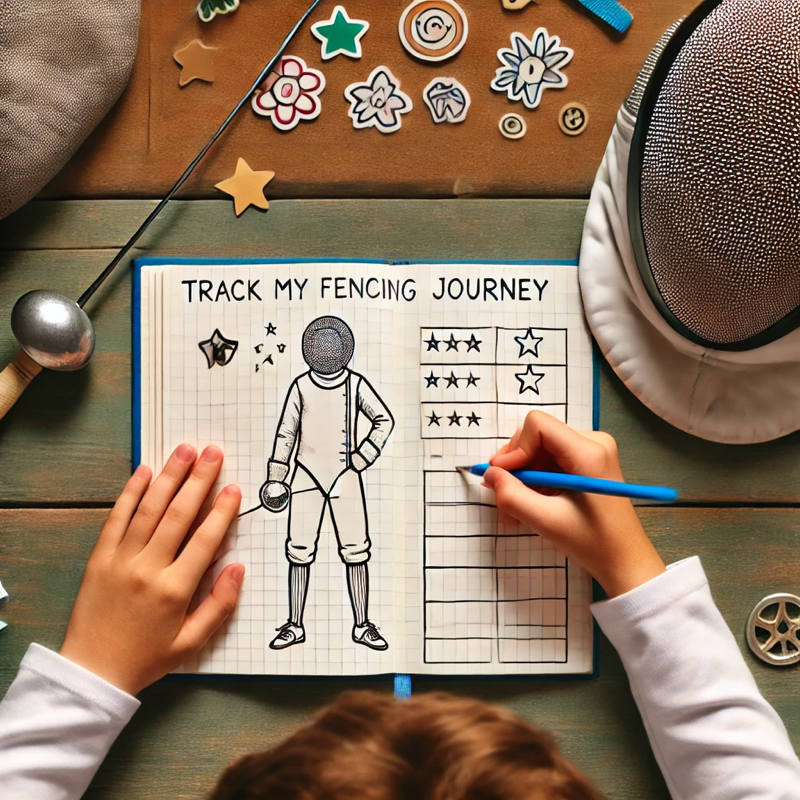
One of the coolest things about fencing is that you can measure your improvement in so many ways—from how steady your en garde stance feels to how quickly you can deliver a lunge. By setting goals and tracking your progress, you make each practice feel like a step toward becoming the fencer you dream of being!
A Quick Story: Carlos’s Fencing Journal
Carlos was excited about fencing, but he sometimes felt unsure if he was getting better. His coach suggested starting a fencing journal. Each day, Carlos wrote down little notes like:
• “Today, I finally did a perfect lunge!”
• “Coach said my parry was faster, but I need to work on my footwork.”
• “I won 2 out of 5 practice bouts—time to improve my endurance.”
After a few weeks, Carlos looked back at his notes and saw just how much he’d grown. He also spotted exactly where he still needed work. Whenever he reached a new milestone—like learning a new parry—he celebrated by adding a sticker or drawing a funny sword doodle in his journal. It made training feel fun and focused.
Setting Smart Goals
A goal can be anything from “Master my footwork” to “Score 5 points in a tournament bout.” Just make sure it’s:
• Specific: Know exactly what you’re aiming for.
• Measurable: You can track your progress (like timing your footwork drills or counting successful parries).
• Achievable: Start with goals you can realistically meet, then challenge yourself more as you improve.
Celebrating Milestones
• Small Wins: Did you finally remember to keep your arm extended during a lunge? High five! Write it down and be proud.
• Bigger Goals: Maybe you advanced to the next round in a tournament or learned a new attack sequence. Treat yourself—maybe a fun sticker or a photo in your journal to remember the moment.
Tracking Progress Creatively
• Fencing Journal: Write down daily or weekly notes on what went well and what needs work. Add drawings or stickers to make it personal.
• Video Reviews: Ask a friend or parent to film your practice. Watching yourself fence can show you things you might not notice in the moment.
• Checklists: Create a simple list of skills you want to master—like parry 4, parry 6, or a clean lunge—and check them off as you get better.
Why Train with Purpose?
By setting clear objectives and keeping track of your journey, you’ll feel more confident every time you step onto the strip. You’ll see your own growth, celebrate the little victories, and know exactly how to reach that next level. It’s like having a treasure map for your fencing adventure!
Coming Up Next: Ready to outsmart your opponent? Stay tuned for our post on introducing strategy—where we’ll learn how to read an opponent’s moves and find the perfect moment to strike!