
A closer look at the three main fencing weapons, their differences, and how to choose one.
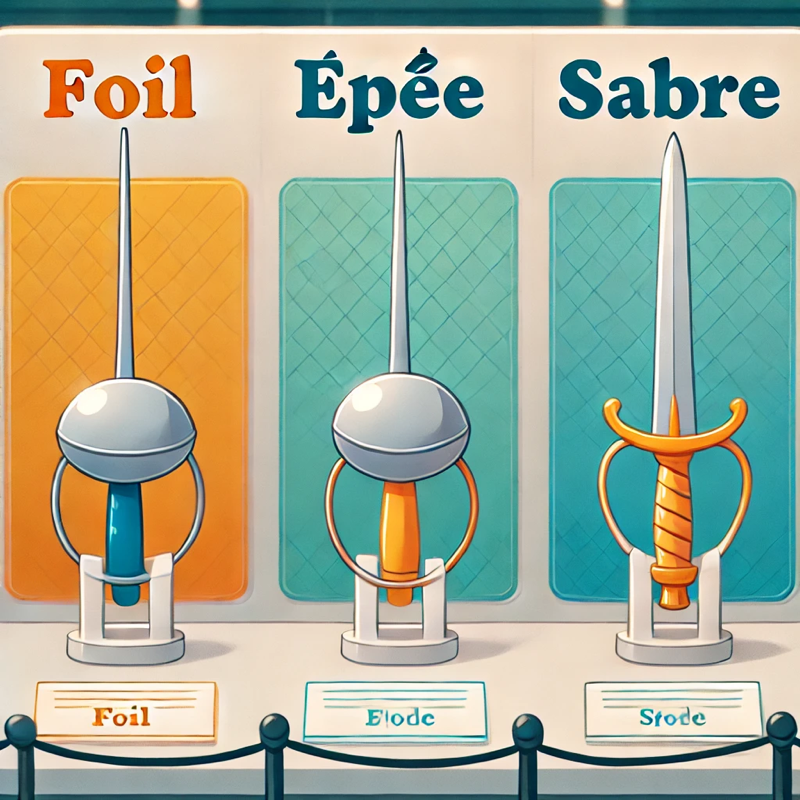
Blog Post 4: Sword Talk: Exploring Foil, Épée, and Sabre
Close your eyes and imagine you’re an adventurer, searching a secret castle passage. Ahead, you see three shiny swords mounted on the wall. Each one looks cool, but they all seem a little different. Which one do you pick?
In fencing, you have a similar choice to make—though your “castle” is really a fencing club, and the “shiny swords” are actually three types of fencing weapons: foil, épée, and sabre. All of them are used for scoring hits in a match, but each has its own personality. Today, let’s step into that castle and explore.
The Royal Foil
Imagine a sword that’s slender and fancy, like something you’d see in a fairytale duel. That’s the foil—light, flexible, and delicate-looking. But don’t let its thin blade fool you: it’s mighty in a fencer’s hands!
In foil, you can only score points by touching your opponent’s torso (basically, the chest and back area). That might sound simple, but here’s the twist: only the first person to start an attack correctly can score. This is called right of way, and it’s a fun rule that rewards quick reflexes and careful strategy. Foil fencers usually wear a special metallic vest called a laméthat helps judges see when the target area is touched.
The Grand Épée
If the foil is delicate, then the épée is its sturdier cousin. Think of it like a knight’s rapier—solid and slightly heavier. In épée, the entire body is a valid target area. That means you can aim for the arm, foot, toe, or even the mask to score a point!
There’s no right of way in épée, so if both fencers strike within a fraction of a second, they both get a point. Because of that, épée fencers learn to be patient and clever, waiting for the perfect moment to lunge or trick their opponent. Some people call épée “the duelist’s weapon,” because it feels closest to old-fashioned sword fighting.
The Flashy Sabre
Now, picture a swift and shiny blade that can slice through the air like a pirate’s cutlass. That’s the sabre. It’s the fastest of the three weapons, and you can score points by hitting anywhere above the waist (including arms and head). Right of way rules also exist in sabre, but the action is super quick—like a lightning bolt!
Sabre is the only fencing weapon where you can slash as well as poke. This makes bouts feel intense and energetic. A great sabre fencer needs lightning-fast footwork and an even faster mind to decide whether to attack or defend.
Which Weapon Will You Choose?
It’s normal to be excited by all three weapons. Many beginner fencers start with foil, because it teaches the basics of fencing and helps you learn right of way. Others love the target freedom of épée or the swashbuckling style of sabre. Don’t worry if you’re not sure which one is right for you—sometimes you get to try them all as you learn!
Here’s the secret: there’s no wrong choice. Each weapon has its own charm. The best part is discovering which style makes you feel like a real hero on the strip.
Stay tuned for our next post, where we dive into all those fancy fencing words you’ve probably heard at practice—and learn what they really mean!