
An overview of the mask, jacket, glove, and other essentials, plus safety tips.
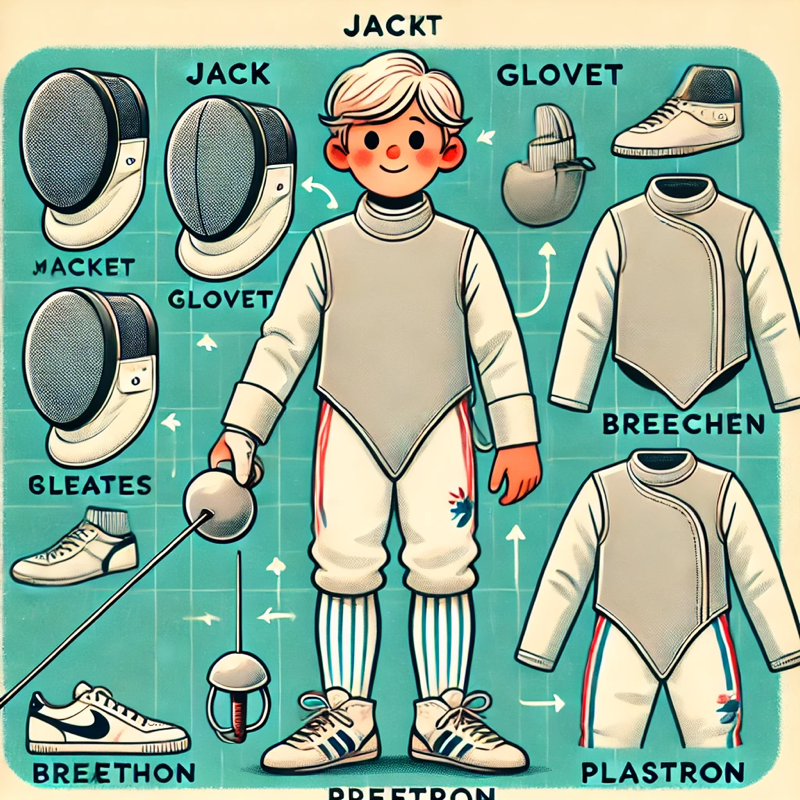
When you step onto the fencing strip, it’s not just your moves that keep you safe—it’s also your gear! Fencing equipment may look unusual at first, but each piece serves an important purpose: to protect you from head to toe. Let’s explore the different parts of a fencer’s outfit and discover why every piece matters.
Head to Toe Protection
1. Mask
• What It Does: Protects your face and head from any accidental hits.
• Fun Fact: The mesh design lets you see clearly while shielding your face from a foil, épée, or sabre.
2. Jacket (or Lamé for Foil/Sabre)
• What It Does: Covers your arms, torso, and back. The lamé (pronounced “lah-MAY”) is an electric vest used in foil and sabre to detect hits on the valid target area.
• Fun Fact: It’s designed to be snug but flexible, so you can lunge, parry, and move quickly.
3. Glove
• What It Does: Protects the hand holding the weapon. It has a padded cuff to shield your wrist and forearm.
• Fun Fact: Fencers only wear one glove—on the hand that holds the sword!
4. Breeches (Fencing Pants)
• What They Do: These knee-length pants protect your thighs and knees.
• Fun Fact: They might look old-fashioned, but they’re perfect for keeping you agile. You’ll usually wear tall socks to cover any exposed skin below the knee.
5. Under-Plastron
• What It Does: A protective layer worn under the jacket on your weapon arm side. It provides extra padding in case of strong thrusts or hits.
• Fun Fact: It’s thin but adds an important extra cushion of safety.
6. Chest Protector (Optional or required depending on the rules, especially for younger fencers or female fencers)
• What It Does: Adds a hard shield over the chest area.
• Fun Fact: Though lightweight, it offers solid coverage against unexpected jabs.
7. Fencing Shoes
• What They Do: Provide strong grip and good support for quick footwork.
• Fun Fact: If you don’t have special fencing shoes yet, regular athletic shoes with non-marking soles can work too—just be sure they have good traction.
Keeping It Safe
• Check Your Gear Before Each Practice: Make sure there are no tears or loose parts. If something feels off, tell your coach!
• Wear Everything Properly: Zip up your jacket all the way and adjust your mask until it fits snugly.
• Clean Your Equipment: Fencing gear can get sweaty. Washing and airing out your gear keeps it fresh and prevents wear-and-tear.
• Listen to Your Coach: Rules are in place to keep everyone safe. Following them not only protects you, but also your fencing friends.
Why All This Gear?
Some people wonder if all that protective clothing is really necessary. The answer is yes—because safety is the top priority in fencing. With the right equipment, you can focus on having fun, improving your skills, and challenging yourself, all while staying protected.
Coming Up Next: Get ready to learn about foil, épée, and sabre—the three distinct fencing weapons and what makes each one special!