
Simple tips for kids to manage nerves and think clearly during bouts.
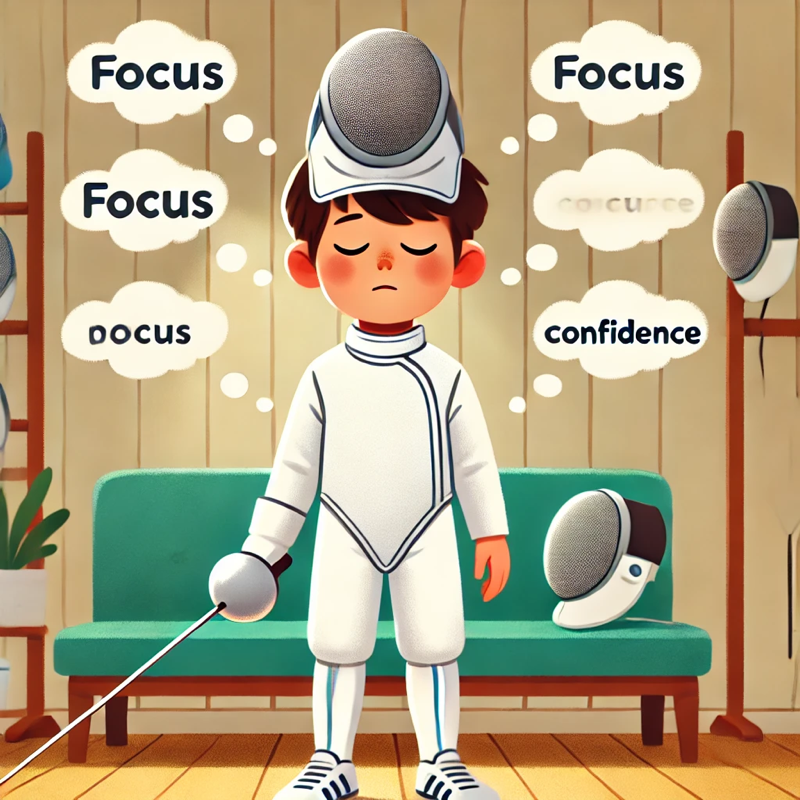
When the referee calls, “En garde… Allez!” your heart might start pounding, and your hands might feel a little shaky. That’s okay—it happens to everyone! Whether you’re about to fence in your first practice bout or your tenth tournament, learning how to keep calm and focused is a powerful skill that helps you fence your best.
A Quick Story: Dani’s First Tournament
Dani practiced for months before the local tournament. They knew their footwork, attacks, and defensive moves. But when Dani stepped onto the strip, their heart felt like it was racing too fast. Suddenly, all the moves they’d rehearsed seemed to jumble in their mind.
Taking a deep breath, Dani remembered something the coach always said: “Focus on what you can control—your breathing, your stance, and your next move.” Dani exhaled slowly, returned to en garde, and told themselves, I’ve practiced for this. I can do it.
With each exchange, Dani felt a little more settled. Even though they didn’t win every point, they fenced confidently and learned to trust their training. In the end, Dani was proud—not just for fencing well, but for managing nerves like a champ.
Easy Ways to Stay Calm and Confident
1. Breathe In, Breathe Out
• Taking slow, deep breaths before a match can settle a racing heart. Inhale for four counts, hold for a moment, then exhale for four counts.
• Think of each breath as a mini reset button for your mind.
2. Positive Self-Talk
• Instead of thinking, “What if I lose?” tell yourself, “I’m ready for this. I’ve practiced hard.”
• A simple phrase like “I’ve got this” can remind you of your strengths.
3. Visualize Success
• Close your eyes and imagine yourself making a successful lunge or parry. Feel the confidence that comes from doing it right.
• This mental rehearsal helps your body follow through when it’s time to fence for real.
4. Focus on the Present
• Don’t worry about the final score or what your opponent is thinking. Concentrate on this point, this moment.
• If you make a mistake, let it go and move on to the next exchange.
5. Have a Routine
• Develop a short ritual before each bout—maybe a quick stretch, a deep breath, and tapping your foot to the ground.
• A consistent routine can calm your nerves by giving you something familiar to focus on.
Handling Tough Moments
• Dealing with Disappointment: It’s normal to feel upset if you lose a point or a match. Give yourself a moment to feel the emotion, then remind yourself that each mistake is a chance to learn.
• Facing an Intimidating Opponent: Remember that everyone feels nervous sometimes. Even a strong fencer had to start somewhere. Focus on your plan rather than how “good” your opponent is.
Why Mindset Matters
Fencing isn’t just a physical sport—it’s a mental one, too. By practicing confidence and calm, you’ll find it easier to remember your techniques and respond quickly. Over time, you’ll realize that those butterflies in your stomach can be turned into excitement, helping you perform at your best.
Find out how fencing matches are scored and what those lights on the scoring machine mean in our post about all about the strip—scoring, matches, and referees!