
Breaking down fundamental movements that form the backbone of every fencer’s skill set
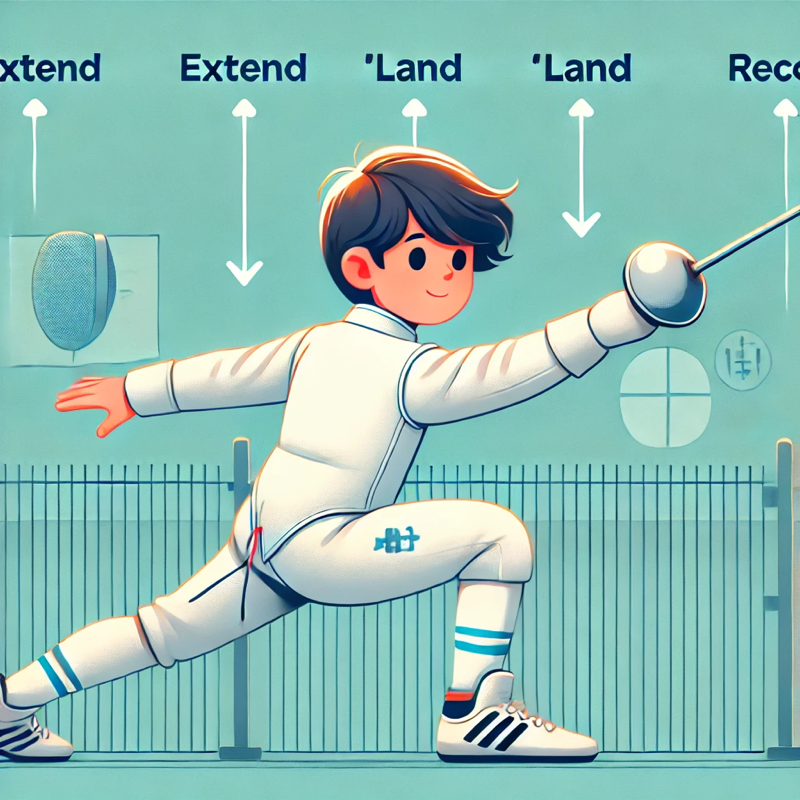
Picture this: You’re in your fencing gear, sword in hand. Your opponent stands just out of reach, ready to defend themselves. The referee calls, “Fencers, en garde… Allez!” and you spring into action. Suddenly, you launch forward, arm extended, aiming for the perfect touch. That explosive move is called the lunge, and it’s one of the most exciting parts of fencing!
What is a Lunge?
A lunge is a fast step forward that helps you quickly close the distance to your opponent. When done right, it makes you feel like a fearless knight charging into battle—except here, you’re aiming for a controlled touch, not a real fight.
A Quick Story: Alex Learns to Lunge
Alex was tired of just shuffling around in en garde stance. Sure, footwork practice is important, but Alex really wanted to do something big. Then Coach smiled and said, “Today’s the day you learn how to lunge.”
Step One: Arm out!
Coach explained that before Alex moves a foot, the sword arm must extend first. “Point your blade right where you want to land the touch,” Coach said. This prepares your aim and starts the attack.
Step Two: Push off the back leg.
Next, Coach asked Alex to bend the knees just a little, then launch forward by pushing off the back leg like a spring. Alex felt a burst of power and excitement.
Step Three: Land softly on the front foot.
Alex’s front foot slid forward, knee bent to absorb the landing. “Keep your balance,” Coach reminded. The back leg stays straight, with the heel lifted if you need to reach further.
Step Four: Follow Through!
Coach clapped as Alex’s blade gently tapped the target. “Keep your arm extended until you’re sure you scored!” Coach cheered. Alex felt a rush of triumph—like a real swordsman.
Step Five: Recover.
“Don’t forget to get back!” Coach said. Alex used the front leg to push back into en garde. The lunge might feel like the grand finale, but it’s just as important to be ready for whatever comes next!
Why the Lunge Matters
• It Gives You Reach: The lunge helps you cover more distance than just stepping forward.
• It’s Your Quick Attack: When you notice an opening, a fast lunge lets you strike before your opponent can react.
• It Builds Confidence: Landing a good lunge feels amazing! You’ll trust your speed and accuracy more with each success.
Tips for Young Fencers
• Warm Up First: Stretch those legs so you don’t strain your muscles.
• Start Slow: Practice lunging slowly at first, focusing on perfect form instead of speed.
• Listen to Your Coach: They’ll let you know if your stance is too wide or if your arm needs adjusting.
• Have Fun: The lunge can feel dramatic—enjoy that burst of energy and pretend you’re performing a heroic leap!
Now that you’ve mastered the art of the lunge, get ready to defend yourself against incoming attacks. Our next post will dive into the defensive moves—like parrying—that keep you safe on the strip!