
Suggested workouts and footwork drills your child can do at home to improve agility.
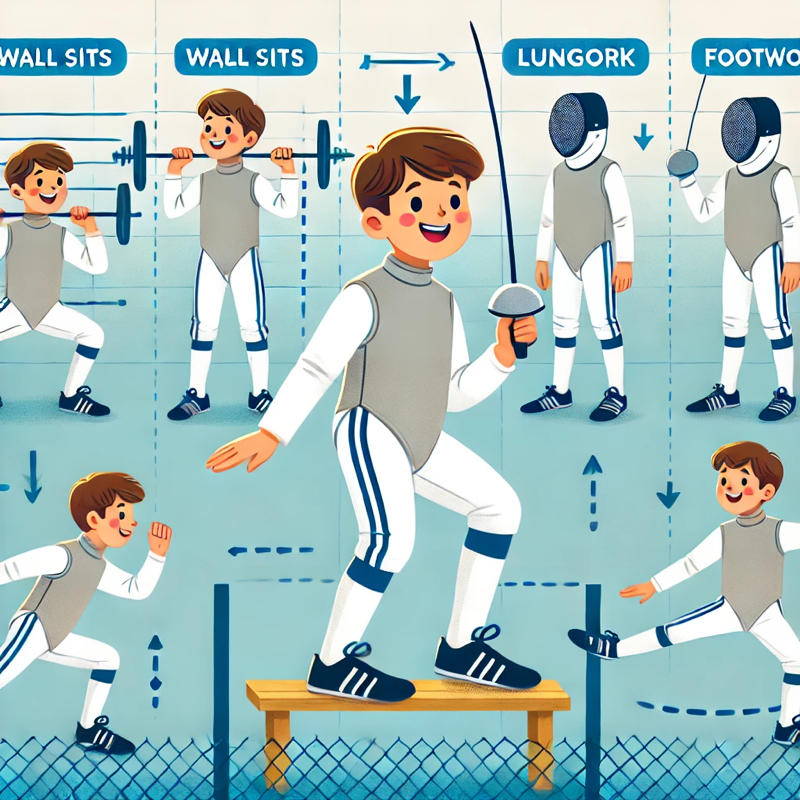
Imagine you’re in the middle of a fencing match, and you see a chance to score a winning touch. You push off your back leg, launch into a swift lunge, and—victory! That burst of power doesn’t come from nowhere; it comes from practicing exercises that build strength and agility. You can do many of these workouts and drills right at home!
A Quick Story: Marco’s After-School Routine
Every day after school, Marco would change into comfy clothes, grab a water bottle, and head to his backyard. Instead of just daydreaming about winning matches, he put in a little extra work to become stronger and faster. Little by little, Marco noticed he could lunge further, move faster, and stay balanced more easily.
Warm-Up: Keep It Fun
Before diving into exercises, always start with a warm-up. Think of it like waking up your muscles so they’re ready for action.
• Arm Circles: Stretch your arms wide and make small circles in the air.
• Hip Twists: Stand with feet apart, hands on hips, and gently twist left to right.
• Jumping Jacks: A classic way to get your heart pumping and blood flowing.
Strength Exercises for Young Fencers
1. Lunge Holds
• What to Do: Stand in your en garde stance. Step into a lunge and hold it for 3–5 seconds. Return to en garde and repeat.
• Why It Helps: Builds leg strength and stability for longer, more powerful lunges in matches.
2. Squats
• What to Do: With feet shoulder-width apart, bend your knees like you’re about to sit in a chair. Keep your back straight, then stand up.
• Why It Helps: Strengthens your thighs and glutes, helping you move more explosively on the strip.
3. Planks
• What to Do: Get into a push-up position but rest on your forearms. Keep your back straight like a table, and hold for 10–20 seconds.
• Why It Helps: Strengthens your core muscles, which helps keep you balanced when you fence.
4. Wall Sits
• What to Do: Lean your back against a wall and “sit” in an invisible chair, thighs parallel to the floor.
• Why It Helps: Fires up your leg muscles so you can stay in a good en garde stance longer without getting tired.
Footwork Drills to Boost Agility
• Advance-Retreat Repeats: Stand in en garde and practice advancing (moving forward) and retreating (moving backward) in quick succession. Count 5 advances and 5 retreats without stopping. Increase speed as you get comfortable.
• Line Hops: Place a small line of tape or a ribbon on the floor. Stand on one side, then hop sideways back and forth over the line with quick, light jumps. This drill builds faster feet and helps you change direction quickly.
• Shadow Fencing: With no opponent in front of you, imagine an attack coming and respond with footwork. Advance, retreat, lunge, and recover—like you’re fencing an invisible rival. This helps build both agility and creativity!
Keep it Short and Fun
You don’t need to spend hours on these exercises. Even 10–15 minutes a day can make a big difference over time, especially for younger fencers. The key is consistency and having fun while you do it!
A Final Thought
When you watch experienced fencers, it might seem like their feet magically glide across the strip. But behind that magic is practice—lots of it. By adding these easy exercises and footwork drills to your routine, you’ll feel more confident, more powerful, and more ready to go for that winning touch!
Next Up: Discover how to conquer those jitters and keep your head in the game in our post on staying calm under pressure and building confidence!